
New Zealand might be a small country at the bottom of the world, but our digital footprint is massive. For Kiwi start-ups and small businesses, Facebook, Instagram, and TikTok are essential tools for reaching customers from Cape Reinga to Bluff.
However, social media is a double-edged sword. Used correctly, it builds fiercely loyal communities. Used poorly, it can destroy a brand’s reputation overnight.
Recently, Kiwis on social media witnessed a masterclass in what not to do. A prominent online retailer went viral in local groups for all the wrong reasons: massive shipping delays, lack of transparency about when products were arriving, and—worst of all—publicly attacking customers who dared to ask, “Where is my order?”
In Aotearoa, word travels fast. If you are starting a business here, you need to understand that your digital reputation is your reputation.
This guide breaks down the essential social media do’s and don’ts to help your new business thrive, build trust, and avoid becoming the next negative viral thread.
The "Big Three" Mistakes to Avoid At All Costs
Let’s start with the behaviours that destroy trust the fastest. These are based on real-world examples of NZ businesses getting it wrong.

1. The Don’t: Delivery Dishonesty and Punishing Loyal Customers
The origin of your stock (whether it’s dropshipped, sitting in your garage, or coming from a local wholesaler) does not matter—what matters is your promise to the customer. When a product is paid for, delivery becomes the central part of the contract.
The Mistakes (Applicable to all Stock Methods):
“Shifting Goalposts”: Continually pushing back promised delivery dates (e.g., “It will ship next week… No, actually next month… Oops, try the month after that…”). Even if the delay is caused by a local supplier, poor communication makes your business look incompetent.
The Insult to Injury: Putting products on sale to generate new cash flow while customers who paid full price weeks or months ago are still waiting for their delayed, unshipped orders. This is a fast way to make loyal customers feel penalised and undervalued, regardless of where your inventory is stored.
The “Do” Alternative: Be Radically Transparent and Respectful of Wait Times.
Communicate Delays Early and Often: If you miss a deadline, email an update immediately. Provide realistic, conservative timeframes instead of optimistic guesses. Use a dedicated “Updates” page on your website to centralise information, saving time for both you and the customer service team.
Implement Ethical Inventory Management: Do not advertise items as “in stock” or ready for delivery unless you have a confirmed ability to ship them within a guaranteed timeframe. If you sell made-to-order items, clearly state the manufacturing time plus the shipping time.
Honour Your Existing Customers: If you must run a sale, ensure all outstanding, paid-for orders are shipped first, or provide a special, exclusive incentive (like a discount on their next order) to those waiting customers to acknowledge the inconvenience. Never prioritise new revenue over fulfilling existing commitments.

2. The Don’t: Attacking or Blocking Customers Who Ask Questions
When a customer comments on your Facebook post asking about a delayed order, it is an opportunity to provide service, not a battlefield.
The Mistake: Responding to queries with defensive sarcasm, blocking the customer for asking a question, or deleting legitimate, non-abusive questions. This signals to everyone else watching that you have something to hide and that you don’t value your patrons.
The “Do” Alternative: Take It Offline Immediately and Always Remain Professional. Your standard public response should be polite and professional: “Hi [Name], I’m so sorry to hear your order is delayed. That’s not the experience we want for you. Could you please send us a private message (DM) with your order number so I can look into this immediately and resolve it?”
This moves the tension out of the public eye and shows other followers that you are responsive and helpful, even when under pressure.
3. The Don’t: Weaponising Your “Fan Base”
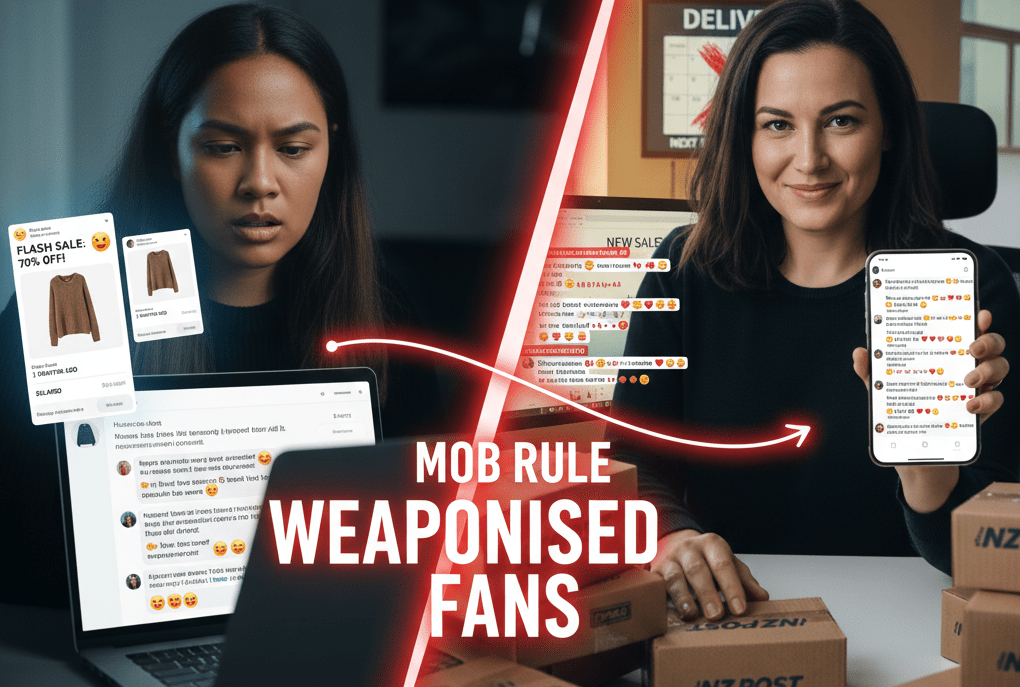
Some businesses cultivate a small group of superfans. While community is good, it turns toxic when a business owner encourages those fans to pile on and bully anyone who posts a critical comment.
The Mistake: Allowing or encouraging your followers to attack another customer who asked a reasonable question. This creates a hostile environment that scares away potential new customers and damages your professional standing.
The “Do” Alternative: Moderation is Your Responsibility. As a business owner, you are the host of the party. If comments get nasty—from either side—it is your job to de-escalate. Never hide behind your fans to do your dirty work. Delete comments that violate decency standards and focus on resolving the original customer issue.
General Social Media “Do’s” for Kiwi Businesses
Moving beyond damage control, how do you actively build a great brand in NZ?
DO lean into your local identity. Kiwis love supporting local. Are you based in Wellington? Show the wind. In Christchurch? Show the rebuild spirit. Use appropriate Kiwi slang (authentically!) and celebrate local holidays or events. Show the faces behind the brand—the “garage startup” vibe resonates well here.
DO provide value beyond the “sell.” If every post is “BUY NOW! SALE ENDS SOON!”, people will tune out. Follow the 80/20 rule: 80% of your content should educate, entertain, or inspire your audience. Only 20% should be hard selling.
DO respond to positive comments too. Don’t just fight fires. If someone leaves a glowing review, thank them publicly! It encourages others to engage. A simple “Chur, thanks for the tautoko!” goes a long way.
General Social Media “Don’ts” for Kiwi Businesses
DON’T ghost your audience. Consistency is key. Posting five times a day for a week and then disappearing for a month looks unprofessional. Find a rhythm you can sustain, whether it’s three times a week or daily.
DON’T steal content. Did you see a great meme or a helpful infographic from another page? Don’t just save it and repost it as your own. Always credit the original creator. New Zealand is too small to get away with content theft for long.
DON’T ignore negative feedback (the constructive kind). Sometimes, negative comments aren’t “attacks”—they are valuable data. If five people complain that your website checkout is confusing, don’t get defensive. Fix the checkout.
Summary: Reputation is Everything
In the digital age, customer service is a spectator sport. How you treat one customer on your Facebook wall is how prospective customers assume you will treat them.
For starting businesses in New Zealand, integrity is your most valuable currency. Be honest about your processes, be kind when facing criticism, and remember that on the internet, nothing is ever truly deleted.